|
|
The Travis Garden serves year round as an outdoor learning laboratory for science. Students have hands-on experience with nature as they plant seeds of their choosing twice a year. They nurture their seeds by weeding and watering until harvest time. Salads, soups, berry desserts and cotton cloth are the products of their planting. |
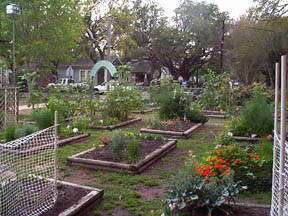 |
In 1989, second grade teacher Margaret Blackstone applied to the National Gardening Association for a grant worth $600 - the beginning of the Travis garden. Ms. Blackstone wanted her students to have the pleasure of digging in the dirt, squealing at worms and watching things grow. She also wanted them to work on school subjects like science, math and language skills - - and intangibles like self-confidence and discipline - - while they played. |
|
In early spring 1989, the National Gardening Association also wanted those things for Travis students, too, donating $600 worth of materials. Vegetable seeds, flower seeds, bulbs, roses, insecticides, gardening tools, even a sprinkling system began arriving in the school mail |
|
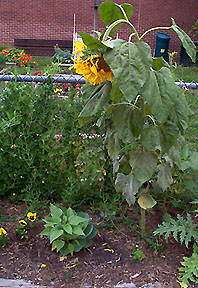 |
Colorful flowers are planted to attract butterflies and bees. Fruit trees were planted to attract birds for bird watching. |
|
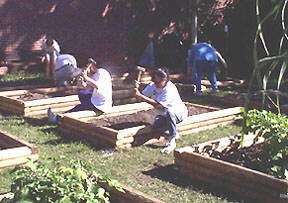
Each year Chase Bank has generously funded various garden projects - from funding the drip irrigation system to most recently purchasing all new lumber to rebuild each bed. Volunteers are shown from this year's Chase Global Work Day installing new landscape timbers for each of the 30 garden beds. |
|
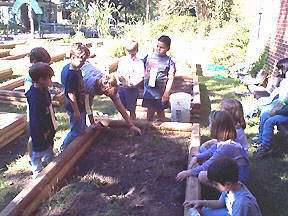 |
The garden/science teachers meet with all the classes each week to conduct gardening and nature study activities. By engaging the children in such real and hands-on studies, Travis hopes to foster interest in science and nature that will continue in their elective courses in secondary school and adult life. |